hero media

The rise of passion travel: how your hobby can shape your next trip

By swapping postcard-perfect itineraries for passion-fuelled adventures, travellers are finding new ways to explore and connect.

If you’re anything like me, you’ll know what it feels like to have an intense passion or hobby quietly guide your choices, sometimes even subconsciously. For me, it’s always been words – they’re the reason I lose countless hours in a bookshop, pore over essays on linguistics for leisure and analyse the lyrics of all my favourite songs.

Words are the reason I chose to study Communications at university. The reason I took intensive French classes for eight years, a passion that took me to France as an exchange student at the young age of 14. Somehow, words have managed to influence most of my decisions in one way or another, and will no doubt continue to do so throughout my life – from the way I spend my weekends to where I travel next. Turns out, I’m not alone either.

What is passion travel?

To put it simply, passion travel is all about letting your hobbies lead the way. It’s when your love for something – whether that be food, art or sport – shapes your travel itinerary. Rather than ticking off landmarks, you’re connecting what you love doing at home with where you go in the world.

Biking in Thredbo, NSW
Passion travel is about letting your hobbies guide your holiday. (Image: Destination NSW)

According to a recent report by Booking.com , more people are chasing meaningful travel experiences that align with their interests, as well as a greater sense of purpose at the heart of each trip. Yogis are signing up for wellness retreats. Athletes are planning their annual leave around marathons. Foodies are mapping out itineraries based on local markets.

While I’ve never been lucky enough to book an entire trip based on my love for books, I have found ways to integrate my passion into the trips I take. On my way to a quiet weekend stay at Osborn House in the Southern Highlands, I made sure I had a few spare hours to spend at the Berkelouw Book Barn , which I’d been eager to check out for ages.

Berkelouw Book Barn in the Southern Highlands, NSW
On a recent trip to the Southern Highlands, I stopped at Berkelouw Book Barn. (Image: Destination NSW)

During a recent work trip to explore Townsville’s burgeoning arts scene, I still found time to check out the local bookshop. Even if I can’t find time for a visit, I always make sure I bring a book with me, so I can still indulge in my passion – even if it’s just for five minutes with my morning coffee or half an hour before bed.

As an introvert, it’s a comforting way to weave a little bit of home into an unfamiliar place – a reminder that even when everything around me is new, I can still ground myself in something I love. But it’s also a way to connect. Stories are often great conversation starters, and many bookshop adventures have led me somewhere unexpected. In that sense, it isn’t just about doing what you love but seeing where that love can take you.

What are the benefits?

In a 2025 study titled Igniting creativity through travel: The roles of interest, cognitive flexibility, and destination information presentation style, Lujun Su, Huixuan Chen and Zhibin Lin found that environmental novelty, the act of experiencing somewhere new, doesn’t just satisfy your wanderlust; it boosts your creativity, too.

Using the broaden-and-build theory developed by social psychologist Barbara Fredrickson in 1998, research revealed that being in an unfamiliar setting can evoke greater cognitive flexibility, making creative thinking more likely.

Nature journalling in the Adelaide Hills, SA
Studies have shown that travel improves creativity. (Image: Visit Adelaide Hills)

When you’re immersed in something you genuinely love, you tend to be more present, observant and engaged. You start to notice the little details: the texture of a local fabric, the scent of freshly ground coffee, the sound of waves crashing on the shore. These sensory moments can spark inspiration and creativity long after a trip has ended, turning travel into a journey of self-discovery and real memory making.

In her book, titled The Happy Traveler: Unpacking the Secrets of Better Vacations, professor of psychology Dr Jaime Kurtz further posits that travel rooted in passion or purpose tends to be more restorative, because it engages you in something intrinsically fulfilling rather than just escapism.
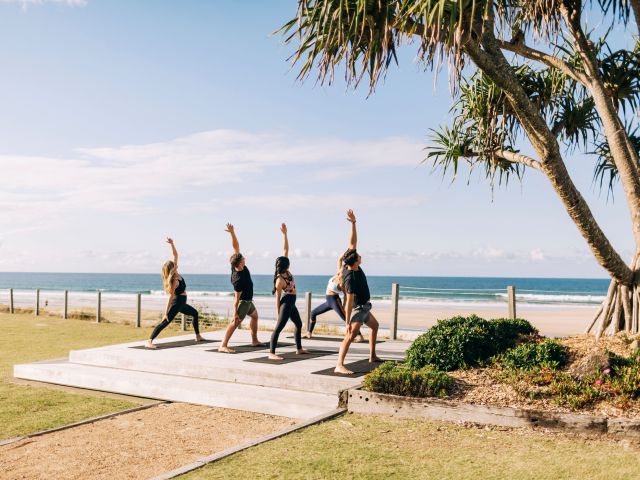
Yoga class at Elements of Byron Bay, NSW
Engaging in your hobbies can make travelling more restorative. (Image: Destination NSW)

While travelling has always been focused on exploring a destination, people are now choosing to invest in themselves along the way. In a world where time is precious and holidays are growing increasingly shorter, combining wanderlust and wellbeing seems like the ultimate way to spend your time off.

Dr Kurtz, who has written for several research publications on the topic, states that travel is most beneficial when it’s “pleasurable, meaningful and engaging." It’s a sentiment that perfectly captures why passion-driven travel is on the rise. Trips grounded in what we find the most enriching and inspiring create a deeper sense of purpose, satisfaction and overall happiness.

And really, isn’t that what travel is all about? Whether you’re following your obsession for food through Melbourne’s best restaurants or bookshop hopping through the Blue Mountains, these are the experiences that make us feel the most connected not just to the world, but to ourselves.

How to do it

If you’ve ever considered booking an entire holiday around what you love most, here’s your sign to do it. Whether it’s sipping your way through the Barossa Valley’s best cellar doors or hitting all of Sydney’s top art galleries in one go, your passion-led itinerary is sure to add an extra layer of excitement to every moment.

Museum of Contemporary Art in Sydney, NSW
Art aficionados can visit the iconic MCA in Sydney. (Image: Destination NSW)

Mountain bikers, why not tackle the Munda Biddi Trail ? Or if you’re a big fan of sport, plan your next trip to Melbourne around the Australian Open . Wherever your interests lie, there’s always a destination ready to match them.

But before you start booking, there are a few handy tips and tricks that can help you along the way. Firstly, it’s important to pick one hobby that really matters to you – it’ll keep choices manageable and ensure the trip feels meaningful. Be sure to do your research and prioritise key bookings in advance, too. If there’s a workshop or event you don’t want to miss, make sure it’s booked in early.

As much as itineraries can help, you should leave a little room for surprises. Try to avoid planning every minute so there’s still space to explore. It’s also crucial to factor in time to rest. A passion trip can easily become exhausting if you overload your schedule, so allowing time to relax and recharge will make the whole experience more enjoyable.
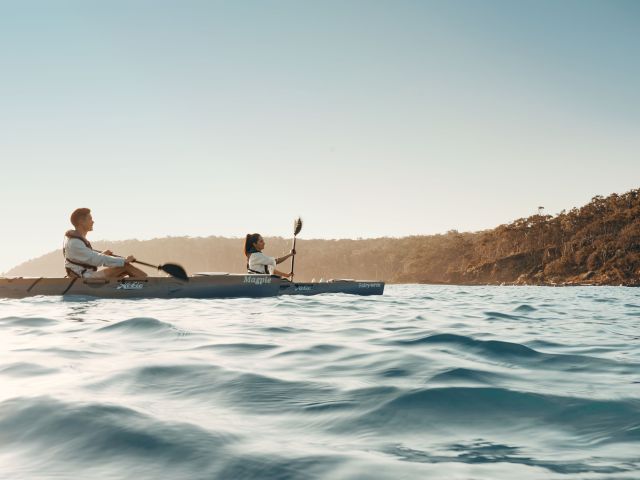
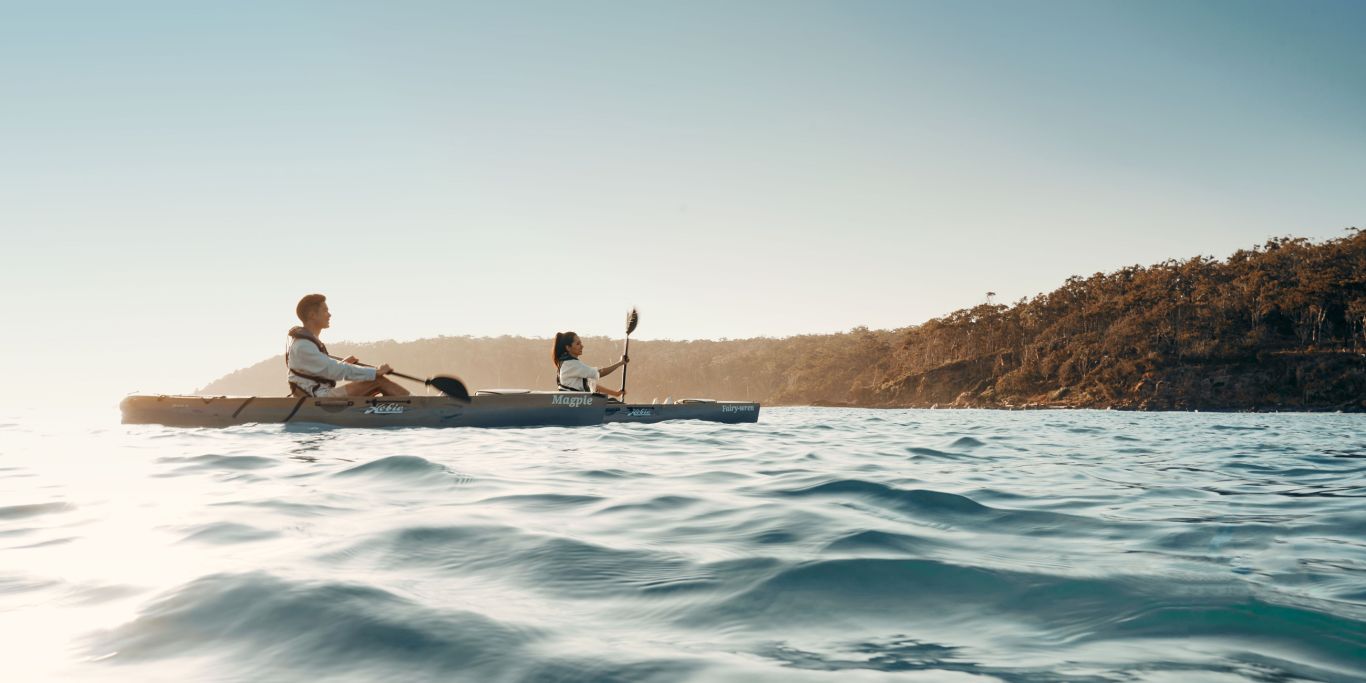
Kayaking in Pambula, NSW
Add your favourite activity to an upcoming itinerary. (Image: Destination NSW)

Of course, not everyone has the resources to book an entire holiday around a single hobby or interest – and that’s perfectly okay. The beauty of passion travel is that it can be as simple as slipping your latest read into your carry-on. Or packing a sketchbook to capture the scenery. Sign up for a local cooking class. Join a local kayaking tour. Even visiting the weekend market in a new town can help you connect with what you love.

If you don’t really have an interest that truly speaks to you, don’t worry. Sometimes it’s the trip itself that helps you discover a new passion. Maybe you’ll fall in love with photography while chasing sunsets along the coast. Or discover your green thumb after visiting a botanical garden. Travel has a funny way of awakening hidden parts of ourselves – and the best souvenirs are often the ones we bring home in our hearts.


Taylah Darnell
Taylah Darnell is Australian Traveller's Writer & Producer. She has been passionate about writing since she learnt to read, spending many hours either lost in the pages of books or attempting to write her own. This life-long love of words inspired her to study a Bachelor of Communication majoring in Creative Writing at the University of Technology Sydney, where she completed two editorial internships. She began her full-time career in publishing at Ocean Media before scoring her dream job with Australian Traveller. Now as Writer & Producer, Taylah passionately works across both digital platforms and print titles. When she's not wielding a red pen over magazine proofs, you can find Taylah among the aisles of a second-hand bookshop, following a good nature trail or cheering on her EPL team at 3am. While she's keen to visit places like Norway and New Zealand, her favourite place to explore will forever be her homeland.
View profile and articles
hero media

The Macedon Ranges is Victoria’s best-kept food and wine secret

    Emily McAuliffe Emily McAuliffe
    Located just an hour north-west of Melbourne, the largely undiscovered Macedon Ranges quietly pours some of Australia’s finest cool-climate wines and serves up some of Victoria’s best food.

    Mention the Macedon Ranges and most people will think of day spas and mineral springs around Daylesford, cosy weekends away in the countryside or the famous Hanging Rock (of enigmatic picnic fame). Or they won’t have heard of the Macedon Ranges at all.

    But this cool-climate destination has been inconspicuously building a profile as a high-quality food and wine region and is beginning to draw serious attention from oenophiles and epicureans alike.

    The rise of Macedon Ranges wine

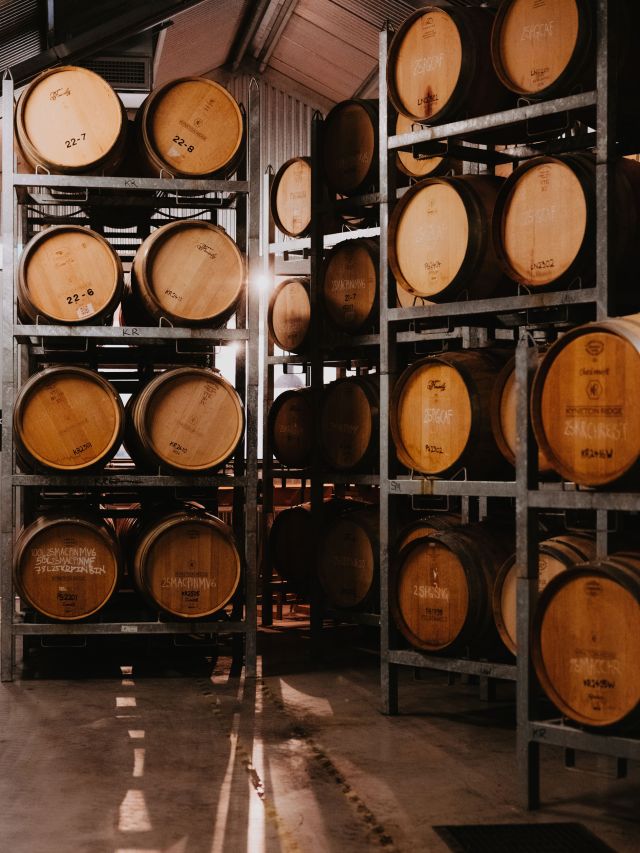
    liquid gold barrels at Kyneton Ridge Estate Winery
    Barrels of liquid gold at Kyneton Ridge Estate Winery. (Image: Chloe Smith Photography)

    With elevations ranging from 300 to 800 metres, Macedon Ranges vineyards are among the highest in the country. This altitude, combined with significant day/night temperature swings, makes for a slow ripening season, in turn nurturing wines that embody elegance and structure. Think crisp chardonnays, subtle yet complex pinot noirs and delicate sparkling wines, along with niche varietals, such as gamay and nebbiolo.

    Despite the region’s natural advantages – which vary from estate to estate, as each site embodies unique terroir depending on its position in relation to the Great Dividing Range, soil make-up and altitude – the Macedon Ranges has remained something of an insider’s secret. Unlike Victoria’s Yarra Valley or Mornington Peninsula, you won’t find large tour buses here and there’s no mass marketing drawing crowds.

    Many of the 40-odd wineries are family-run operations with modest yields, meaning the wineries maintain a personal touch (if you visit a cellar door, you’ll likely chat to the owner or winemaker themselves) and a tight sales circle that often doesn’t go far beyond said cellar door. And that’s part of the charm.

    Though wines from the Macedon Ranges are just starting to gain more widespread recognition in Australia, the first vines were planted in the 1860s, with a handful of operators then setting up business in the 1970s and ’80s. The industry surged again in the 1990s and early 2000s with the entry of wineries, such as Mount Towrong, which has an Italian slant in both its wine and food offering, and Curly Flat , now one of the largest estates.

    Meet the new generation of local winemakers

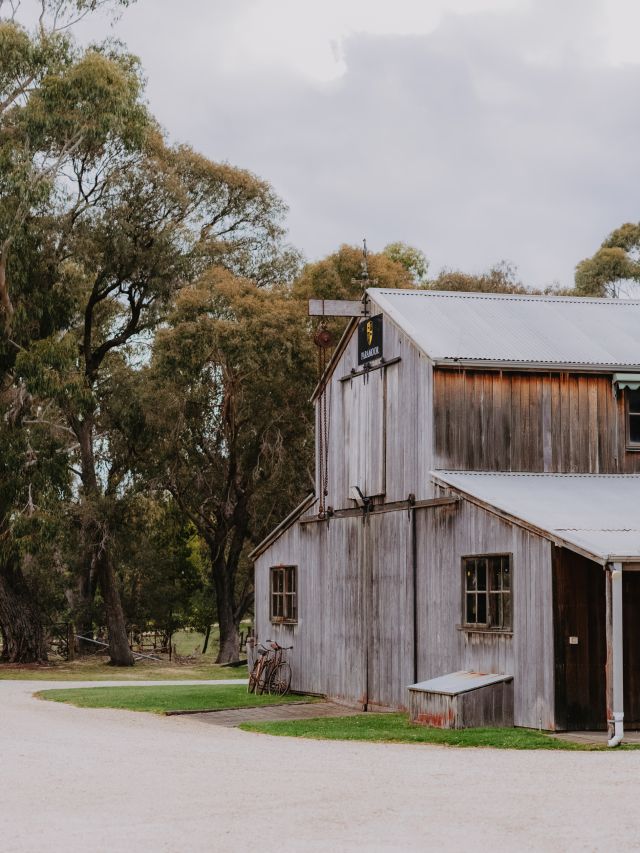
    the Clydesdale barn at Paramoor.
    The Clydesdale barn at Paramoor. (Image: Chloe Smith Photography)

    Then, within the last 15 years, a new crop of vignerons like Andrew Wood at Kyneton Ridge Estate , whose vineyard in 2024 was the first in the Macedon Ranges to be certified by Sustainable Winegrowing Australia; Geoff Plahn and Samantha Reid at Paramoor , who have an impressive cellar door with a roaring fire and studded leather couches in an old Clydesdale barn; and Ollie Rapson and Renata Morello at Lyons Will , who rapidly expanded a small vineyard to focus on top-shelf riesling, gamay, pinot noir and chardonnay, have taken ownership of local estates.

    Going back to the early days, Llew Knight’s family was one of the pioneers of the 1970s, replacing sheep with vines at Granite Hills when the wool industry dwindled. Knight is proud of the fact that all their wines are made with grapes from their estate, including a light, peppery shiraz (some Macedon wineries purchase fruit from nearby warmer areas, such as Heathcote, particularly to make shiraz) and a European-style grüner veltliner. And, as many other wineries in the region do, he relies on natural acid for balance, rather than an additive, which is often required in warmer regions. “It’s all about understanding and respecting your climate to get the best out of your wines,” he says.

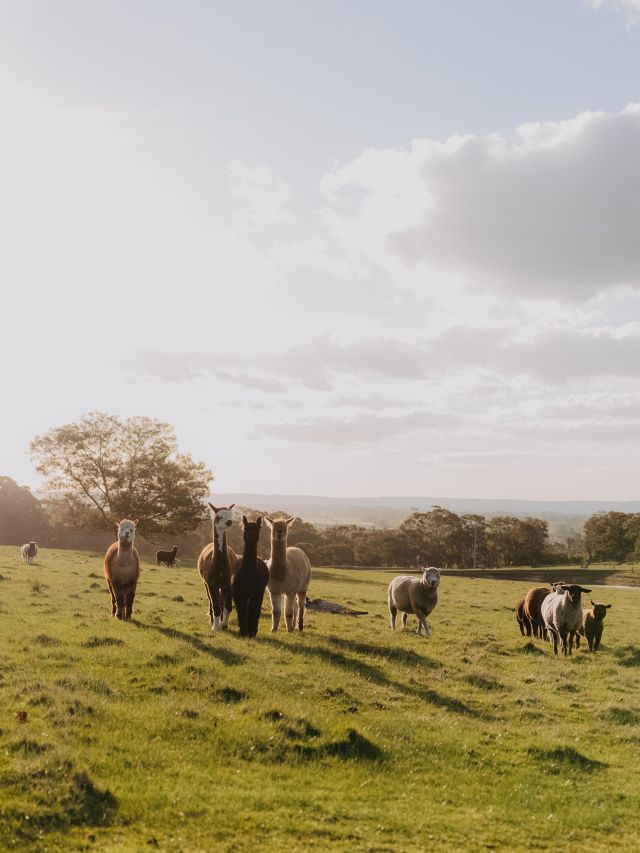
    farm animals atKyneton Ridge Estate
    Curious residents at Kyneton Ridge Estate. (Image: Chloe Smith Photography)

    Throughout the Macedon Ranges, there’s a growing focus on sustainability and natural and low-intervention wines, with producers, such as Brian Martin at Hunter Gatherer making waves in regenerative viticulture. Martin previously worked in senior roles at Australia’s largest sparkling winemaking facility, and now applies that expertise and his own nous to natural, hands‑off, wild-fermented wines, including pét‑nat, riesling and pinot noir. “Wild fermentation brings more complexity,” he says. “Instead of introducing one species of yeast, you can have thousands and they add different characteristics to the wine.”

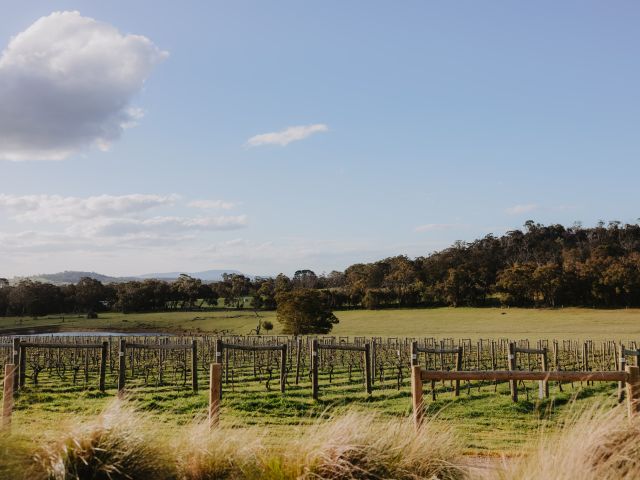
    the vineyard at Kyneton Ridge Estate Winery
    The estate’s vineyard, where cool-climate grapes are grown. (Image: Chloe Smith Photography)

    Most producers also focus on nurturing their grapes in-field and prune and pick by hand, thus avoiding the introduction of impurities and the need to meddle too much in the winery. “The better the quality of the fruit, the less you have to interfere with the natural winemaking process,” says Wood.

    Given the small yields, there’s also little room for error, meaning producers place immense focus on quality. “You’re never going to compete in the middle [in a small region] – you’ve got to aim for the top,” says Curly Flat owner Jeni Kolkka. “Big wineries try to do things as fast as possible, but we’re in no rush,” adds Troy Walsh, owner and winemaker at Attwoods . “We don’t use commercial yeasts; everything is hand-harvested and everything is bottled here, so we bottle only when we’re ready, not when a big truck arrives.” That’s why, when you do see a Macedon Ranges product on a restaurant wine list, it’s usually towards the pointy end.

    Come for the wine, stay for the food

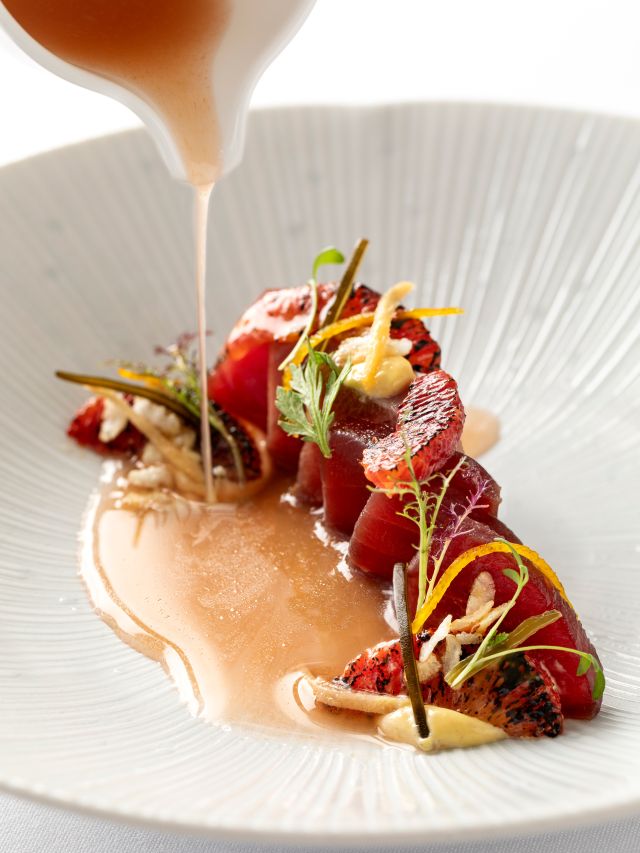
    pouring sauce onto a dish at Lake HouseDaylesford
    Dining at Lake House Daylesford is a treat. (Image: Chloe Smith Photography)

    If wine is the quiet achiever of the Macedon Ranges, then food is its not-so-secret weapon. In fact, the area has more hatted restaurants than any other region in Victoria. A pioneer of the area’s gourmet food movement is region cheerleader Alla Wolf-Tasker, culinary icon and founder of Daylesford’s Lake House.

    For more than three decades, Wolf-Tasker has championed local producers and helped define what regional fine dining can look like in Australia. Her influence is palpable, not just in the two-hatted Lake House kitchen, but in the broader ethos of the region’s dining scene, as a wave of high-quality restaurants have followed her lead to become true destination diners.

    the Midnight Starling restaurant in Kyneton Ridge Estate Winery
    The hatted Midnight Starling restaurant is located in Kyneton. (Image: Chloe Smith Photography)

    It’s easy to eat well, whether at other hatted restaurants, such as Midnight Starling in the quaint town of Kyneton, or at the wineries themselves, like Le Bouchon at Attwoods, where Walsh is inspired by his time working in France in both his food offering and winemaking.

    The beauty of dining and wine touring in the Macedon Ranges is that it feels intimate and unhurried. You’re likely to meet the winemaker, hear about the trials of the latest vintage firsthand, and taste wines that never make it to city shelves. And that’s worth getting out of the city for – even if it is just an hour down the road.

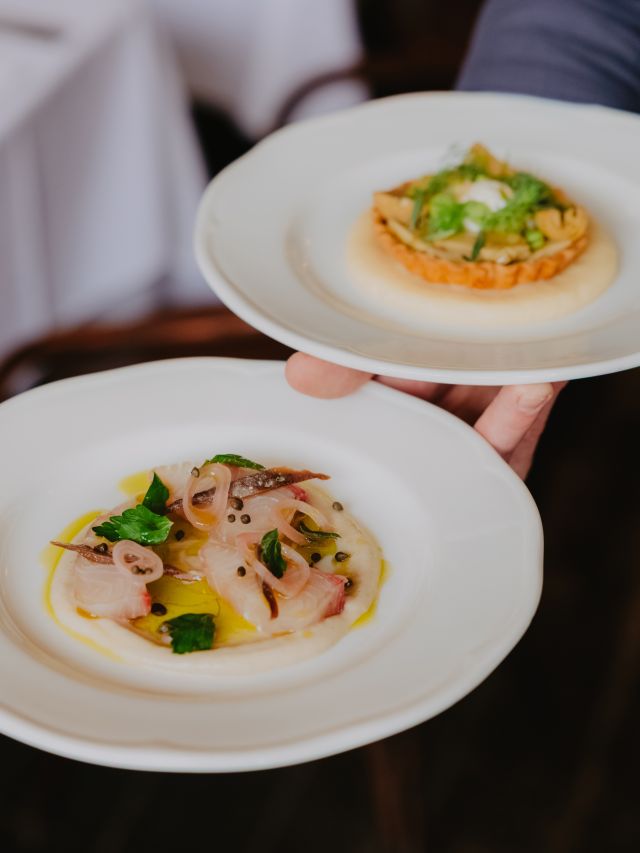
    dishes on the menu at Midnight Starling
    Delicate dishes on the menu at Midnight Starling. (Image: Chloe Smith Photography)

    A traveller’s checklist

    Staying there

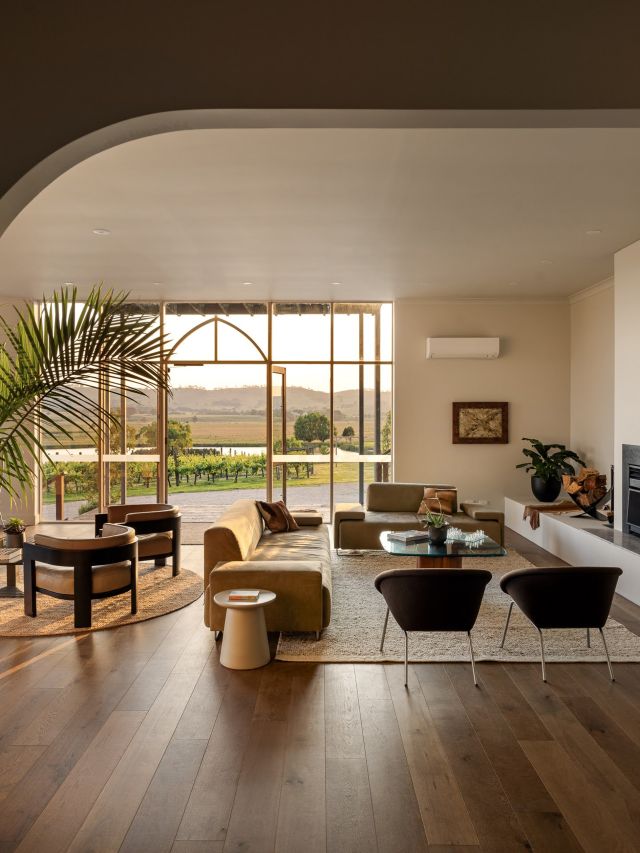
    the accommodation at Cleveland Estate, Macedon Ranges
    Stay at the Cleveland Estate. (Image: Chloe Smith Photography)

    Soak up vineyard views from Cleveland Estate near Lancefield , embrace retro charm at Kyneton Springs Motel or indulge in lakeside luxury at the Lake House .

    Eating there

    Enjoy a four-course menu at the one-hatted Surly Goat in Hepburn Springs, Japanese-inspired fare at Kuzu in Woodend or unpretentious fine dining at Mount Monument , which also has a sculpture park.

    Drinking there

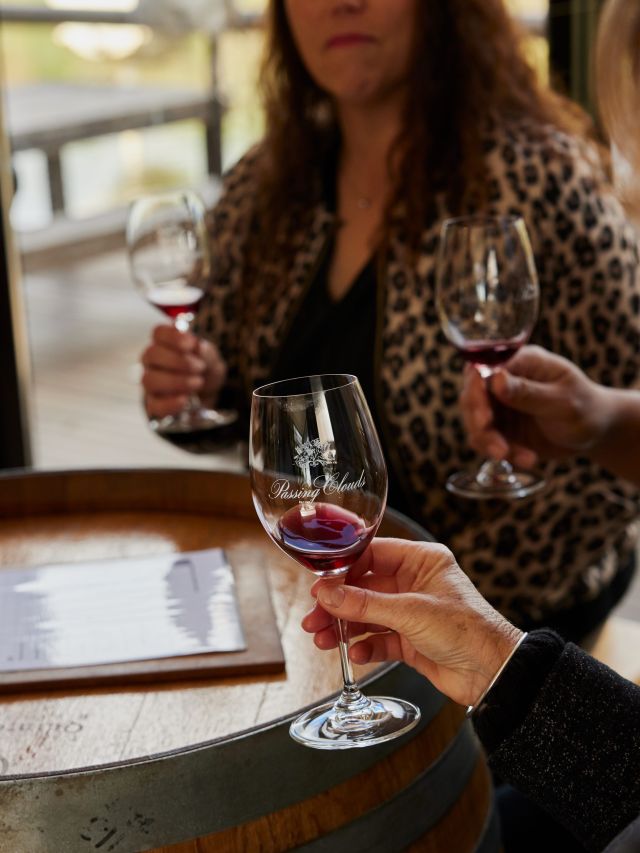
    wine tasting at PassingClouds Winery, Macedon Ranges
    A tasting at Passing Clouds Winery. (Image: Chloe Smith Photography)

    Settle in for a tasting at Boomtown in Castlemaine, sample local drops at the cosy Woodend Cellar & Bar or wine-hop around the many cellar doors, such as Passing Clouds .

    the Boomtown Winery and Cellar Bar signage
    Boomtown Winery and Cellar Bar. (Image: Chloe Smith Photography)

    Playing there

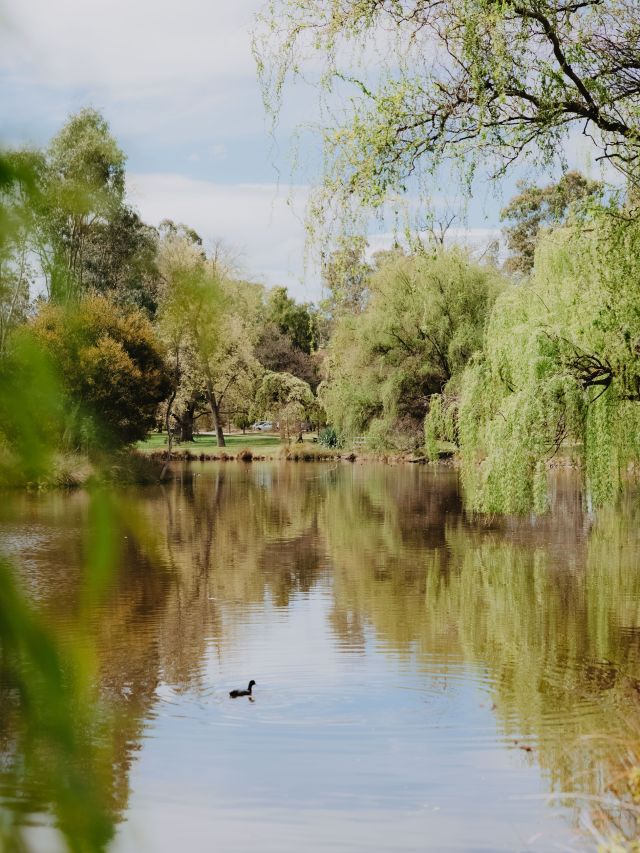
    a scenic river in Castlemaine
    Idyllic scenes at Castlemaine. (Image: Chloe Smith Photography)

    Wander through the seasonal splendour of Forest Glade Gardens , hike to the summit of Hanging Rock, or stroll around the tranquil Sanatorium Lake.

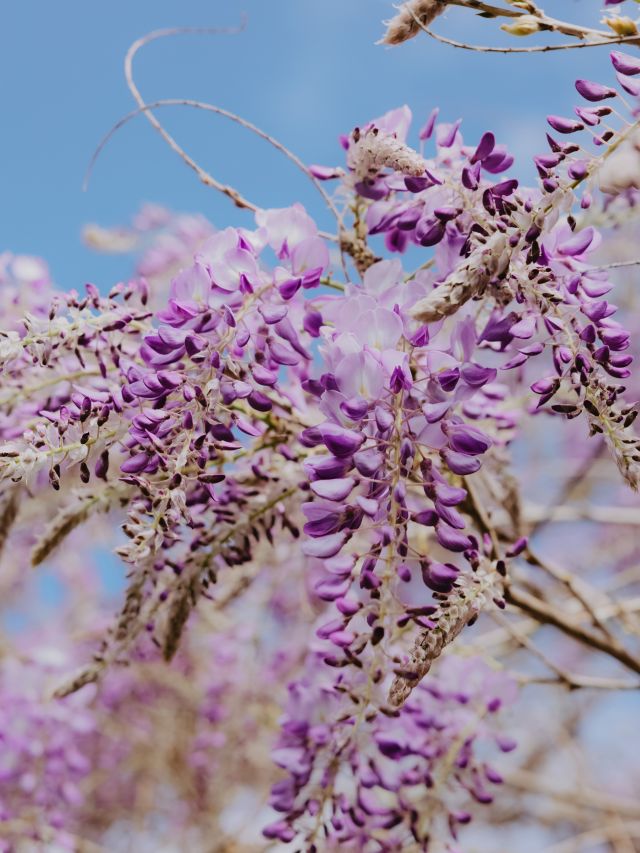
    purple flowers hanging from a tree
    Purple flowers hanging from a tree. (Image: Chloe Smith Photography)